


if you’re an early gen z baby like me, it’s highly likely your mother sat you down with american girl’s infamous book, the care and keeping of you, to explain the nuances of the birds and the bees.
i was 10 at the time and needless to say curious. i remember going off to my room, turning straight to page 45 (iykyk), and wondering when i’d make it to stage 5 (thank god i did). i begged my mom to let me buy a justice training bra (she said no), and constantly wondered when i would become a “real woman.”
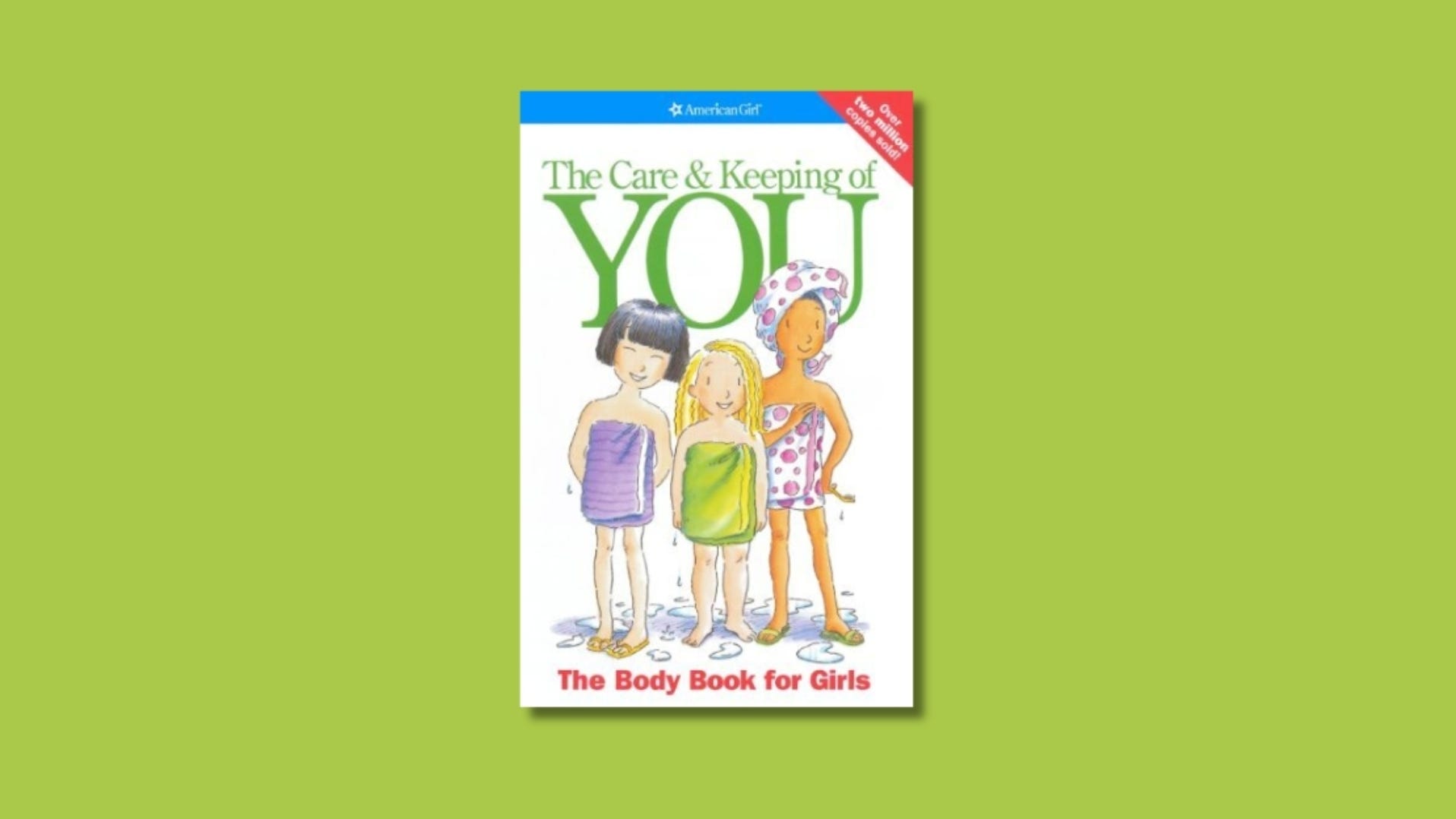
what i didn’t know at the time was this book would be the only form of sex education i would ever receive in my youth.
don’t get my wrong i love my parents, but coming from a strict catholic family with set religious views, conversations around puberty and sex were few and far between in my household. the only acceptable form of birth control in my parents eyes was good ole’ abstinence - hence why i was subsequently excused from every possible health class in middle school.
but no matter what they did, it didn’t change the fact that i was still a teenager and i was still horny! so i took matters into my own hands to figure out wtf was up with my physiology.
so i read. a lot. after by anna todd1 was the catalyst of my sexual awakening (thank you wattpad). i began to learn more about pleasure, yet the concept of an orgasm was still somewhat foreign to me. i started tracking my period meticulously, and even though i didn’t fully understand it at the time, i was slowly introduced to terms like “ovulation!” and “follicular!”
surely those little blue circles on my flo app had to mean something right?

my curiosity about my body took many shapes over the years, but it wasn’t until a total nightmare experience with birth control in my early twenties that it ended up turning into a lifelong mission.
now five years and a stack of certifications later, i feel deeply called to help women understand the full breadth of their physiology—to better advocate for themselves, experience true pleasure, and tackle every phase of reproductive life with confidence.
so ladies, listen UP!!
i want you to be honest with yourself: do you actually understand your period?? like, beyond the care and keeping of you.
before we dive into all the nuances of reproductive health (which i'll be doing over the next few weeks on my substack!) i want to start with a little lesson on my girl, the menstrual cycle.
the 411
your menstrual cycle serves one biological purpose: to prepare the body for potential pregnancy. every month, your uterus builds up a thick lining to support a fertilized egg. if fertilization doesn’t occur, your body sheds this lining. that monthly shedding? that’s your period babe!
now that you’re up to speed, it’s time to dive into the juicy details. because frankly there’s a hell of a lot more to her than PMS.
the menstrual phase (days 1-5ish)
the menstrual phase begins on day one of your period.
hormones such as estrogen2 and progesterone3 are at their lowest levels, which triggers the uterine lining to break down and expel. why you may ask? when an egg goes unfertilized (we’ll get to this i promise) it signals to the body it’s time to try again and restarts this cycle.
as for those awful cramps? you can thank chemical compounds called prostaglandins.4 they force the uterus to contract to ensure the entirety of the unnecessary lining is purged.
fun right! (not)
let me pause here, because girl, i know it’s a LOT. women’s bodies are up to some crazy shit, i'm telling ya.
if you’re confused already, you’re not alone: studies show that only 30.4% of women can identify the specific roles hormones such as estrogen and progesterone play in their bodies. i'm here to fix that.
on the bright side, did you know, having sex on your period can actually relieve cramps? whether you have a partner or a trusty vibe in your nightstand, orgasms release pain-relieving endorphins that help the uterine muscles relax. so get to dancing babe!

the follicular phase (day 1 - 13)
i know what you’re thinking: how can the follicular and menstrual phases overlap? aren’t they supposed to be two different things?
let me let you in on a little secret: the menstrual phase is actually just the beginning of the larger follicular phase. the follicular phase officially begins on day one of your period and continues all the way up until ovulation.
babe, the follicular phase is your time to shine. as your body prepares an egg for fertilization, hormones such as estrogen and follicle-stimulating hormone (FSH) continue to climb each day.
whether you want to our not, our bodies are primed to prepare for reproduction, so take advantage of that rising libido. increased blood flow to the pelvis heightens sensitivity, and a mid-phase testosterone boost will have your energy tank on full. all this to say, use this time to get it on and crush some PRs in the gym (or both? at the same time? idk what you’re into!)
something important to keep in mind: sperm can live inside the uterus for up to 5 days. if you’re not trying to get pregnant, be cautious when having unprotected sex during days 9-13 as those pesky things can stick around for a while!
ovulation (day 14)
ohhhh baby (literally)! if your cycle is a mountain, ovulation is the summit.

if you thought you were horny before, just wait. triggered by a surge in luteinizing hormone (LH), your ovary releases a mature egg into the fallopian tube. your body is primed for reproduction, sex drive hits its peak, and your cervix is ready to put on a SHOW—producing clear, stretchy, egg-white-like cervical mucus designed to help sperm swim (gross).
even more confused? for what it’s worth, only about 20% of women actually know how to pinpoint their fertile window! welcome to the educated club!
for my girls who experience not so great symptoms during ovulation: you’re not crazy! ovulation pain, aka mittelschmerz (i know it’s a mouthful), affects about 40% of women. this pain may consist of one-sided cramping, dull aches in the lower abdomen and mild nausea. ovulation is supposed to bring peak energy, but remember: two things can be true at once. i know i go back and forth between feeling both sexy andddd slightly sick during this time.
wake up and smell the roses! a lil reality check for ya: an egg only lives about 12-24 hours after it has been released into the fallopian tubes. this means ovulation is pretty short! keep in mind though, sperm that like to camp out and make themselves at home several days prior can fertilize an egg. this means your fertile window is about 6 days long. if you’re not trying to conceive, keep it in your pants! you have (roughly) 22 other days of the entire month you can f*ck. chill.
the luteal phase (days 15-28ish)
oh girl you’re in for it.
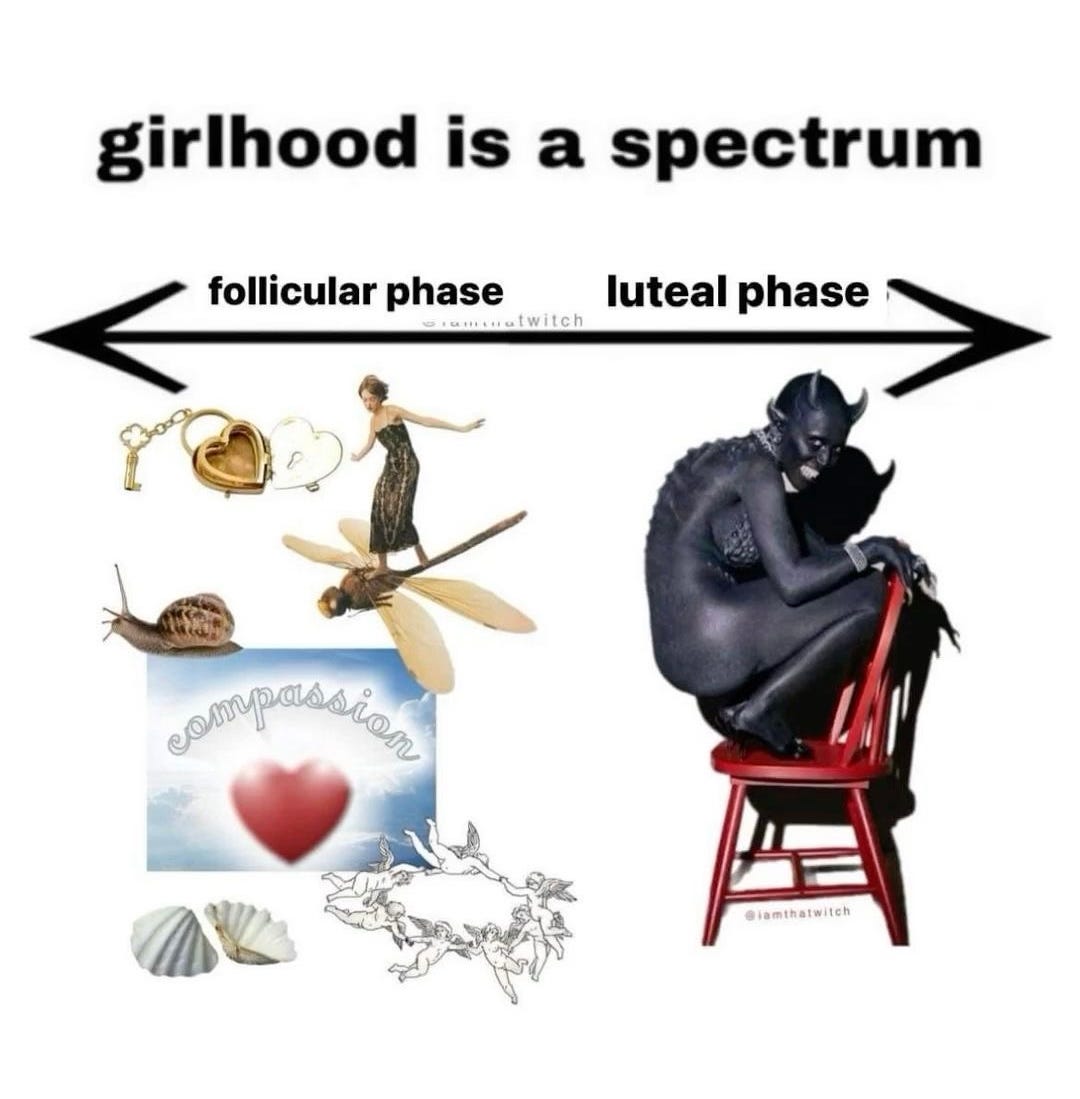
now that your egg has been released the empty follicle will collapse and transform into a tiny temporary gland called the corpus luteum.
the corpus luteum then starts pumping on progesterone (w/ some estrogen in the mix) to keep the uterine lining nice and thick, just in case an egg should be fertilized.
if fertilization doesn’t occur, the corpus luteum naturally breaks down after about 10-14 days leading progesterone and estrogen to plunge to rock bottom and…welcome to PMS baby.
these dramatic shifts in hormonal states are the main driver behind pre-menstrual symptoms. it’s completely normal for your energy to drop and to experience the classic lineup: bloating, mood swings, anxiety (lower estrogen can negatively impact serotonin production!), cravings anddd feeling extra sensitive this time of the month.
god, i love being a woman!!
why you should give a sh*t
i know I know…you’re probably thinking, “wait, why didn’t we learn any of this in 10th-grade biology class?” (hint hint: sex-ed failed us.)
i know it can be overwhelming, but it is sooo important you understand your fertile windows whether you’re actively trying to conceive or avoiding pregnancy at all costs.
i am a firm believer that education is empowerment.
understanding your body’s internal hormonal rhythm changes everything. you stop beating yourself up and start working with your biology. hence why you’re a powerhouse one week and bed-rotting the next.
oh and guess what? understanding your physiology completely levels up your love life. imagine being able to turn to your man and say:
“hey babe, i just finished ovulating and since my progesterone is high, i’m feeing prettyyy tired. i know i felt so good yesterday, but these shifts in hormones can literally happen overnight. do you mind making me some dinner and we can watch a show?”
when your partner understands your biology they understand YOU. all of you.
and honestly? it’s about damn time.
work 1-1 with me: i’m brooke, a certified holistic health coach. i help women understand their physiology, regulate their nervous systems, and optimize their hormones so they can live happier and healthier lives.
ready to stop fighting your body and start working with your physiology? book a free 1-1 consultation with me here.
if you were a (late) middle/high school girl back in 2016, reading this “book” was a right of passage. i never looked at harry styles the same lol.
estrogen is the primary female sex hormone produced mainly by the ovaries that drives reproductive development, regulates the menstrual cycle, and supports bone, heart, and brain health.
progesterone is a female sex hormone whose primary purpose is to prepare the endometrium (lining of your uterus) for a fertilized egg to implant and grow. if no pregnancy occurs the endometrium sheds during your menstrual period (hence the blood). if conception occurs progesterone will increase to support pregnancy.
prostaglandins are hormone-like lipid molecules produced in the lining of the uterus that trigger the muscular contractions necessary to shed the uterine lining during menstruation.
I'm 39 and have two teenage daughters, and it still surprises me how little we actually learn about our own bodies growing up. We spend years studying things at school that we'll probably never use, yet something that affects us every single month barely gets explained. I really hope we're doing better for the next generation.